

Hey there! As a gear motor supplier, I often get asked about the speed control methods of gear motors. It's a crucial topic, especially for those who rely on these motors in various applications. So, let's dive right into it and explore the different ways to control the speed of a gear motor.
Why Speed Control Matters
Before we get into the methods, let's understand why speed control is so important. In many industrial and consumer applications, the ability to adjust the speed of a gear motor is essential. For example, in a conveyor belt system, you might need to adjust the speed depending on the type of product being transported. In a robotic arm, precise speed control is necessary for accurate movements. So, having a good understanding of speed control methods can help you optimize the performance of your gear motor.


Common Speed Control Methods
1. Voltage Control
One of the simplest and most common methods of speed control is voltage control. The speed of a gear motor is directly proportional to the voltage applied to it. By adjusting the voltage, you can change the speed of the motor. For instance, if you have a DC gear motor, you can use a variable power supply to adjust the voltage. When you increase the voltage, the motor will run faster, and when you decrease the voltage, it will run slower.
However, there are some limitations to this method. As the voltage decreases, the torque of the motor also decreases. This means that at very low voltages, the motor might not be able to provide enough torque to drive the load. So, voltage control is best used for applications where the load is relatively constant and the speed range is not too wide.
2. Pulse Width Modulation (PWM)
Pulse Width Modulation is a more advanced method of speed control. It involves switching the power to the motor on and off at a high frequency. By varying the width of the pulses, you can control the average voltage applied to the motor, and thus, its speed.
PWM is a very efficient way of controlling the speed of a gear motor. It allows for precise speed control over a wide range, and it also helps to reduce power consumption. In addition, PWM can be easily implemented using a microcontroller, making it a popular choice for many applications.
3. Gear Ratio Selection
Another way to control the speed of a gear motor is by selecting the appropriate gear ratio. The gear ratio determines the relationship between the input speed (the speed of the motor) and the output speed (the speed of the driven load). By choosing a different gear ratio, you can change the output speed of the motor.
For example, if you have a motor with a high speed but low torque, you can use a gearbox with a high gear ratio to reduce the speed and increase the torque. On the other hand, if you need a high-speed output, you can choose a gearbox with a low gear ratio.
4. Feedback Control
Feedback control is a more sophisticated method of speed control that involves using sensors to measure the actual speed of the motor and comparing it to the desired speed. If there is a difference between the two, the control system will adjust the input to the motor to bring the speed back to the desired value.
There are several types of sensors that can be used for feedback control, such as encoders and tachometers. Encoders provide precise position and speed information, while tachometers measure the rotational speed of the motor. By using feedback control, you can achieve very accurate speed control, even in the presence of external disturbances.
Different Types of Gear Motors and Their Speed Control
Now, let's take a look at some different types of gear motors and how their speed can be controlled.
Miniature Geared Motor
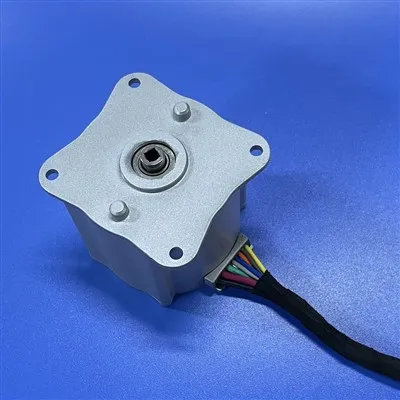
Miniature Geared Motor are often used in applications where space is limited, such as in small robots or consumer electronics. These motors typically have a low power rating and a relatively high speed.
The speed of a miniature geared motor can be controlled using voltage control or PWM. Since these motors are often used in applications where precise speed control is required, PWM is a popular choice. By using a microcontroller to generate the PWM signals, you can easily adjust the speed of the motor.
Planetary Gear Motor
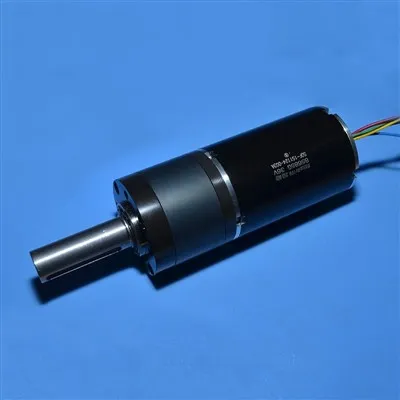
Planetary Gear Motor are known for their high torque density and compact size. They are commonly used in industrial applications, such as in conveyor systems and robotics.
The speed of a planetary gear motor can be controlled using a combination of voltage control, PWM, and gear ratio selection. Since these motors are often used in high-torque applications, feedback control can also be used to ensure accurate speed control.
Brushless Gear Motor
Brushless Gear Motor offer several advantages over traditional brushed motors, such as higher efficiency, longer lifespan, and less maintenance. They are commonly used in applications where high performance is required, such as in electric vehicles and aerospace.
The speed of a brushless gear motor is typically controlled using a brushless motor controller. These controllers use advanced algorithms to control the motor's speed and torque. In addition, feedback control can be used to ensure accurate speed control.
Conclusion
In conclusion, there are several methods of speed control for gear motors, each with its own advantages and limitations. Voltage control is simple and easy to implement, but it has some limitations in terms of torque. PWM is a more advanced method that allows for precise speed control over a wide range. Gear ratio selection can be used to change the output speed of the motor, and feedback control can be used to ensure accurate speed control.
As a gear motor supplier, we offer a wide range of gear motors, including Miniature Geared Motor, Planetary Gear Motor, and Brushless Gear Motor. If you have any questions about speed control or need help selecting the right gear motor for your application, feel free to contact us. We're here to help you find the best solution for your needs.
References
- "Electric Motors and Drives: Fundamentals, Types and Applications" by Austin Hughes and Bill Drury
- "Motion Control Handbook" by Eugene A. Leduc