

What is the difference between a Micro Inrunner Brushless Motor and an outrunner motor?
In the dynamic realm of electrical engineering and modern robotics, brushless motors have emerged as a cornerstone of innovation, powering everything from high - performance drones to precision - controlled RC cars. Among the various types of brushless motors, two stand out prominently: the Micro Inrunner Brushless Motor and the outrunner motor. As a vendor specializing in Micro Inrunner Brushless Motors, I am frequently asked about the distinctions between these two motor types. In this blog post, I aim to delve into the technical, performance, and application differences to provide a comprehensive understanding.
Structural Design
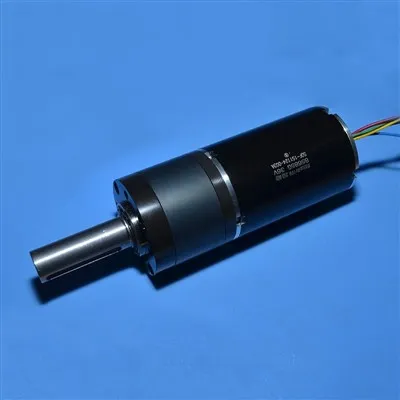
First and foremost, the key difference between these two motors lies in their structural design. The Inrunner Brushless Motor has an internal rotor layout. This design means that the rotor, which holds the permanent magnets, is positioned inside the stator. The stator, in turn, consists of wire windings. In the case of a Micro Inrunner Brushless Motor, this compact internal rotor design is miniaturized, making it suitable for applications where size is a critical factor.
On the contrary, an outrunner motor features an external rotor design. The rotor, encompassing the permanent magnets, surrounds the stator. This outer - shell configuration allows the rotor to have a larger diameter compared to the inrunner motor's rotor of a similar overall motor size.
Performance Characteristics
The distinct structural designs of inrunner and outrunner motors give rise to significant differences in their performance.
Speed


Micro Inrunner Brushless Motors are known for their high - speed capabilities. The internal rotor design reduces the rotational inertia, allowing the motor to achieve rapid acceleration and high RPMs (revolutions per minute). For example, in small - scale racing drones, a Micro Inrunner Brushless Motor can quickly spin up the propellers to generate the thrust needed for quick maneuvers and high - speed flight. The high - speed nature of these motors also makes them ideal for applications in hard - disk drives, where fast rotational speeds are required for efficient data access.
Outrunner motors, on the other hand, have a lower RPM range. The larger diameter of the external rotor results in higher rotational inertia, which restricts the motor's ability to reach extremely high speeds. However, this lower - speed characteristic is compensated by greater torque.
Torque
Torque is a measure of the motor's rotational force. Outrunner motors inherently produce more torque compared to inrunner motors of similar size. The large - diameter, external rotor design allows for a greater distance between the center of rotation and the permanent magnets, which increases the leverage and thus the torque output. This high - torque output makes outrunner motors perfect for applications requiring high - pulling power, such as large - scale drones that need to lift heavy payloads or electric vehicles that require significant torque for acceleration and climbing.
Inrunner motors, including Micro Inrunner Brushless Motors, have relatively lower torque. But they can still be used in applications where torque requirements are not as demanding, and high - speed operation is the priority.
Efficiency
Efficiency in motors refers to the ratio of mechanical power output to electrical power input. In terms of efficiency, the difference between inrunner and outrunner motors depends largely on the application. Inrunner motors generally have higher efficiency at high speeds. Since they are designed to operate at high RPMs, they can convert electrical energy into mechanical energy more effectively in high - speed applications.
Outrunner motors, optimizing for torque, are more efficient at lower speeds. They can better utilize the electrical energy to generate a large amount of torque at lower RPMs, which is valuable in applications that operate predominantly at low - to - medium speeds.
Heat Dissipation
Heat dissipation is another crucial aspect to consider, especially in continuous - operation scenarios.
Inrunner motors, with their internal rotor design, face challenges in heat dissipation. The rotor is enclosed within the stator, and the heat generated during operation is trapped inside the motor to some extent. To address this, additional cooling mechanisms such as heat sinks or forced - air cooling may be required, especially in high - power applications.
Outrunner motors have an advantage in heat dissipation. The external rotor is exposed to the surrounding environment, allowing heat to radiate more easily. This natural cooling effect makes outrunner motors more suitable for applications where continuous, high - power operation is needed without complex cooling arrangements.
Applications
The differences in performance and design determine the specific applications for which each motor type is best suited.
Micro Inrunner Brushless Motors
- Miniature Robotics: In small - scale robotic systems, such as micro - robots used for exploration in confined spaces or educational robots, the compact size and high - speed capabilities of Micro Inrunner Brushless Motors are key advantages. These motors can be easily integrated into the limited space of the robot and provide the necessary speed for quick movements.
- Model Aircraft and Drones: In small racing drones, micro inrunner motors are preferred for their ability to deliver high - speed rotations, enabling the drones to achieve rapid acceleration and high - speed flight.
- Precision Instruments: Instruments that require high - speed and precise movement, such as certain types of medical devices or optical scanners, can benefit from the accurate and fast operation of micro inrunner motors.
Outrunner Motors
- Large - scale Drones and UAVs: Drones designed for heavy - lift applications, such as aerial photography with large cameras or delivery drones, rely on outrunner motors for their high - torque output. The ability to generate significant lifting force allows these drones to carry heavier payloads.
- Electric Vehicles: In electric scooters, bicycles, and small electric cars, outrunner motors can provide the torque needed for acceleration and overcoming road resistance. Their relatively simple cooling requirements also make them practical for automotive applications.
- Industrial Machinery: In industrial settings where heavy - duty motion control is required, outrunner motors can be used to drive conveyor belts, pumps, and other machinery that need large amounts of torque.
Size and Weight
Size and weight are critical considerations, especially in applications where portability and space constraints are important.
Micro Inrunner Brushless Motors are extremely compact and lightweight. Their small form factor and minimal weight make them ideal for applications where every milligram counts, such as in nano - drones or wearable devices. The reduced size also allows for more flexible integration into complex systems.
Outrunner motors are generally larger and heavier due to their external rotor design. The larger diameter and the additional mass of the outer rotor contribute to their increased size and weight. However, in applications where size and weight are less of a concern, such as in industrial machinery or large - scale drones, the performance benefits of outrunner motors outweigh these drawbacks.
Conclusion
In conclusion, the differences between a Micro Inrunner Brushless Motor and an outrunner motor are significant and far - reaching. These differences span from their structural designs to performance characteristics, heat dissipation, applications, size, and weight. As a Micro Inrunner Brushless Motor supplier, I understand that each application has unique requirements, and it is crucial to select the appropriate motor type accordingly.
If you are in the market for a motor and believe that a Micro Inrunner Brushless Motor might be the right choice for your application, I encourage you to get in touch for a detailed discussion. Our team of experts can provide tailored advice and high - quality products to meet your specific needs. Don't hesitate to contact us to start a procurement discussion and explore how our motors can optimize your projects.
References
- Electric Motor Handbook.
- Brushless DC Motor Technology Guide.
- Robotics and Automation Engineering Journals related to motor applications.