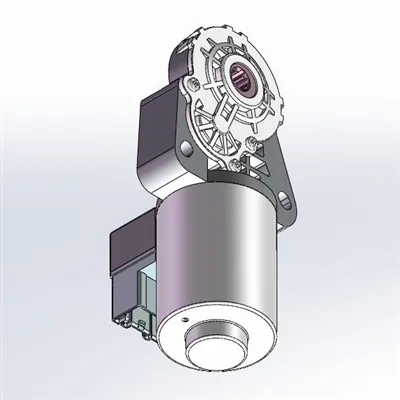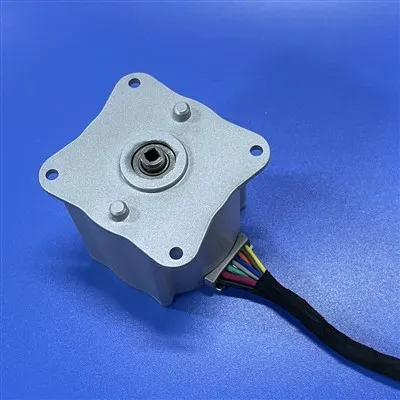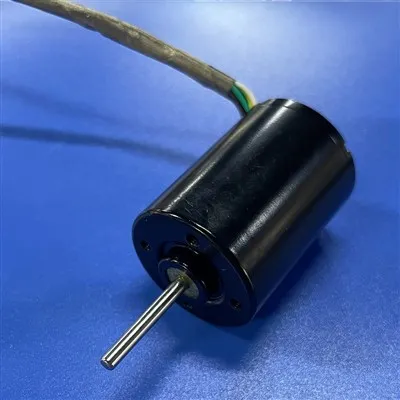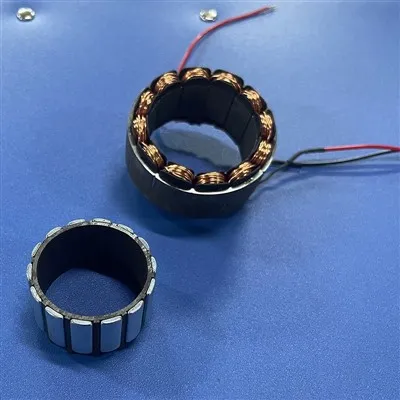


The manufacturing process of brushless DC motors involves a sophisticated mechatronics process, mainly including key steps such as stator winding manufacturing, rotor assembly, sensor installation, electronic controller integration, and automated testing. Modern production is completed through highly automated production lines to ensure product consistency and reliability.
1. Stator Manufacturing
Core Stamping and Lamination: High-permeability silicon steel sheets are stamped and formed, and eddy current losses are reduced through lamination technology.
Winding Embedding: Copper wires are embedded into the stator slots using centralized or distributed winding methods. Currently, centralized winding is the mainstream method, facilitating automated production.
Insulation Treatment and Curing: The windings are impregnated with varnish and dried to improve insulation performance and mechanical strength.
2. Rotor Assembly
Permanent Magnet Installation: High-performance neodymium iron boron (NdFeB) and other rare-earth permanent magnet materials are bonded to the rotor core according to polarity rules to ensure uniform magnetic field distribution.
3. Dynamic Balancing Correction: High-speed rotating components require dynamic balancing testing and correction to prevent excessive vibration during operation.
4. Sensor Integration (Sensitive Motors)
Hall Element Installation: Hall sensors are fixed on the stator side for real-time rotor position detection, enabling precise commutation.
Sensorless Technology Trend: Some high-end products eliminate the need for physical sensors through back-EMF algorithms, improving structural compactness.
5. Controller and Drive Circuit Integration
Drive Board Soldering: Power devices such as MOSFETs/IGBTs and the control chip (MCU) are soldered onto the PCB board to form a three-phase full-bridge inverter circuit.
Software Programming: Pre-programmed PWM control, FOC vector control, or six-step commutation logic programs enable efficient speed regulation and torque control.