

Improving the production efficiency of brushless DC motors hinges on optimizing automated production line design, increasing the speed of key processes, and strengthening quality control and equipment maintenance. Based on current mainstream manufacturing practices, the following are systematic solutions:
1. Promote the Construction of Fully Automated Assembly Lines
Customized Whole Line: If the budget allows, it is recommended to customize a fully automated production line covering stator winding, rotor assembly, sensor installation, drive board welding to complete machine testing. This can significantly reduce manual intervention and improve consistency and cycle time efficiency.
Segmented Upgrades: For companies with limited funds, priority can be given to automating complex processes such as "rotor magnet assembly" and "stator winding," gradually expanding to other stages.
2. Optimize Key Processes
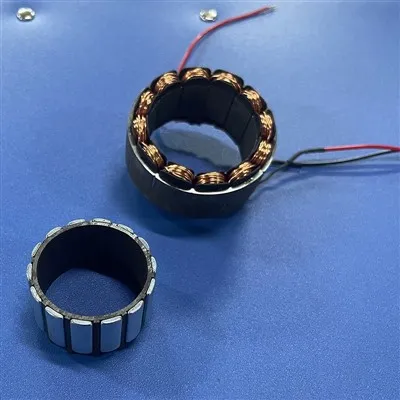
Stator Winding Speed Increase: High-speed multi-station winding machines are used for fine-wire, multi-turn products (such as high-speed fan motors); Dedicated thick-wire winding equipment is used for thick-wire, high-power motors (such as power tools) to avoid wire breakage and damage; Promote the use of external winding technology with a flying fork, which is more efficient than internal winding with a pin.
Automated Welding and Connection: Introduce automatic terminal welding machines to ensure 100% continuity of enameled wire, while improving welding consistency and speed; Adopt PLC + servo control systems (such as Siemens and Panasonic solutions) to achieve precise control and high stability.
3. Strengthen Equipment Maintenance and Operation Management
Establish a regular maintenance system, including lubrication, cleaning, and parts replacement, to prevent downtime due to sudden failures; Optimize production line layout to conform to ergonomics, reduce material handling and operation waiting time, and improve overall smoothness.