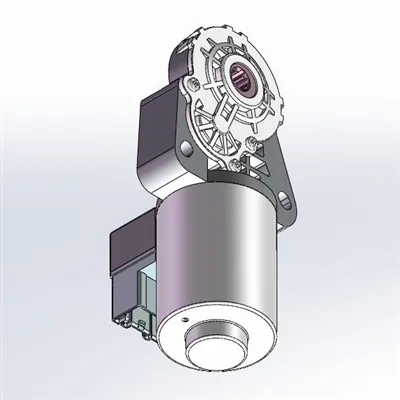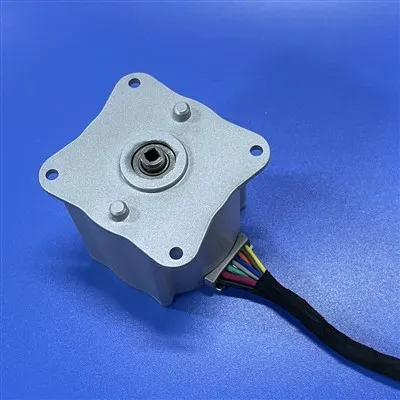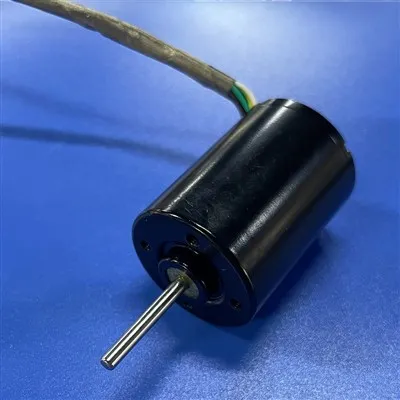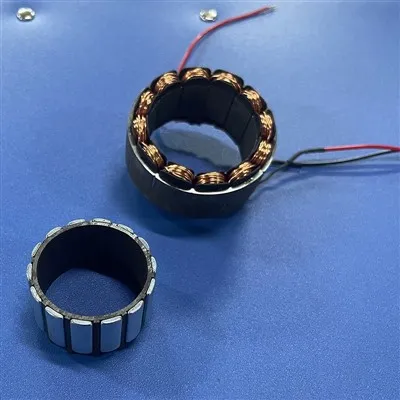


When you sit in a new energy vehicle, the seat automatically adjusts to your preset position, the air conditioning delivers air at the perfect temperature, the center console screen silently rotates to face you, and the door handles automatically pop out. Behind these seemingly simple actions lies an "invisible protagonist": the brushless motor.
Automotive brushless motors are specifically defined as compact motors with an output power typically under a few hundred watts. They are widely distributed across the vehicle's three main areas-the powertrain (electric drive system), chassis, and body-as well as in various accessories. Exactly how many of these motors are installed in a single new energy vehicle? The answer is: far more than you might imagine.
I. Usage per Vehicle: A Range from 20 to Over a Hundred
The number of brushless motors used is directly proportional to the vehicle's class. According to industry statistics:
Standard sedans are equipped with at least 20 to 30 brushless motors, while high-end luxury sedans require 60 to 70, or even over a hundred. Globally, the average number of brushless motors per vehicle was 41.8 in 2024 and is projected to rise to 53.1 by 2029. In China, the average was 49.4 in 2024 and is expected to reach 64 by 2029.
New energy vehicles utilize significantly more brushless motors than traditional internal combustion engine vehicles. Why? Because new energy vehicles have greater demands for motors in their drive systems, energy management, and auxiliary functions, alongside higher levels of investment in intelligence and automation.
II. Four Major Application Systems for Automotive Brushless Motors
The brushless motors found in new energy vehicles can be categorized into four major sectors: the powertrain, chassis system, body system, and intelligent cockpit.
(I) Powertrain System
This is the "powerhouse" of the new energy vehicle. Unlike traditional internal combustion engine vehicles, the electric drive system relies much more heavily on brushless motors:
Main drive motor: The core power source for vehicle propulsion (typically 1 or 2 units).
Automatic transmission control motor: Controls the gear-shifting mechanism. Electric oil pump: Lubrication and cooling circulation for electric drive axles.
Electric water pump: Coolant circulation for battery pack and electric motor thermal management.
Cooling fan motor: Ventilation and heat dissipation for radiators and battery packs.
(II) Chassis System
The chassis is one of the areas with the highest density of automotive brushless motor applications, involving vehicle handling, braking, and suspension:
Electric power steering motor: Provides steering assistance; precision directly affects steering response speed.
Electronic parking brake motor: Enables the electronic parking brake function.
Brake-by-wire motor: Replaces traditional hydraulic braking; response time is less than 200 milliseconds.
Air suspension pump motor: Drives the air compressor to adjust vehicle ride height.
Chassis hydraulic lift motor: Executes independent wheel lifting for active suspension systems.
ABS motor: Controls the Anti-lock Braking System.
(III) Body System
Brushless motors in the body system handle various convenience functions:
Window lift motor: Powers the electric raising and lowering of the four side windows.
Seat adjustment motor: Enables multi-directional adjustments (fore-aft, vertical, backrest angle, etc.).
Wiper motor: Drives front and rear windshield wipers.
Electric tailgate motor: Automates the opening and closing of the trunk/liftgate.
Electric side-opening door motor: Drives sliding doors or gull-wing doors.
Flush door handle motor: Automatically extends flush-mounted door handles.
Rearview mirror adjustment motor: Adjusts the angle of electric rearview mirrors.
Electric sunroof motor: Controls the opening and closing of the sunroof.
(IV) Intelligent Cockpit System
The intelligent cockpit is the fastest-growing sector for automotive brushless motors in new energy vehicles:
Center console screen rotation/lift motor: Adjusts screen angle and position.
HUD flip motor: Adjusts the angle of the Head-Up Display screen.
Electric air vent motor: Automatically adjusts the airflow direction of A/C vents.
Seat massage or ventilation motor: Powers seat comfort functions.
Steering wheel adjustment motor: Enables electric four-way adjustment of the steering wheel.
Ambient lighting control motor: Drives movable ambient lighting components. Regarding seating alone, variations in adjustment functionality mean that electric seat systems typically employ four brushless motors, with the count reaching as many as eight in some configurations.
III. Technological Trends: A Comprehensive Shift from Brushed to Brushless Motors
In the era of traditional internal combustion engine vehicles, brushed DC motors were the standard, powering basic functions such as windshield wipers, cooling fans, and power windows. However, as new energy vehicles demand increasingly higher levels of energy efficiency, reliability, and quiet operation, brushless DC motors are rapidly replacing brushed counterparts.
Thanks to their high efficiency, long service life, and low noise levels, brushless motors have become the mainstream choice for applications such as seat adjustment, power windows, Electric Power Steering (EPS), and electronic water pumps. In the realm of chassis actuators, permanent magnet synchronous motors and brushless DC motors are evolving toward higher power density, greater integration, and intelligent control capabilities.