

I. Electrification and Intelligentization: Reshaping the Auto Parts Industry Landscape
1. Clear Electrification Trend, Systemic Transformation of the Industry Chain
The global automotive industry is accelerating its transformation towards electrification, with the penetration rate of new energy vehicles continuing to climb, forming a clear long-term growth track. On the one hand, many governments are guiding industry transformation through policies such as setting timetables for banning the sale of gasoline-powered vehicles, providing purchase subsidies and tax incentives; on the other hand, OEMs are accelerating the development of new energy platforms and model iterations, massively expanding dedicated production capacity; in addition, the rapid deployment of charging infrastructure is continuously improving user experience and alleviating market growth bottlenecks.
Supported by these favorable factors, the global new energy vehicle industry is expected to maintain rapid growth, bringing certain incremental market and structural opportunities to upstream component industries such as intelligent motors.
2. Explosive Demand for Intelligentization Drives the Electronic Upgrade of Core Components
The electrification process is simultaneously accelerating the intelligent revolution in automobiles. The popularization of technologies such as intelligent cockpits, assisted driving, and domain-centralized electronic and electrical architectures is constantly increasing the demand and performance requirements for core electronic components such as high-performance intelligent motors, high-precision sensors, and intelligent controllers in individual vehicles, fundamentally reconstructing the technological connotation and industrial value of traditional components. The wave of intelligentization is upgrading intelligent motors from "functional components" to "intelligent experience components." For example, intelligent windshield wiper systems with rain sensing and automatic speed adjustment are penetrating from mid-to-high-end models into the mainstream market; car seats are evolving into intelligent comfort modules integrating electric adjustment, ventilation, heating, and massage; and interactive scenarios such as voice and gesture control of windows, sunroofs, and power tailgates are becoming increasingly common, further expanding the application boundaries of miniaturized, highly reliable motors.
In summary, the deep electrification and intelligentization of automotive components have become the core technological foundation for realizing complex vehicle functions and defining a high-end driving experience. The automotive intelligent motor industry is entering a strategic development period of "both volume and price increases" driven by terminal technology transformation.
II. Deepening Domestic Substitution Trends: Local Supply Chain Advantages Highlighted
With the rapid development of my country's automotive industry, cooperation between domestic component suppliers and global OEMs and multinational giants is deepening. Domestic enterprises have achieved breakthroughs in many key areas through technology introduction, digestion, absorption, and reinnovation, accelerating the trend of domestic substitution across the board. This trend is primarily driven by two main forces: First, a systematic leap in domestic technological capabilities, with leading companies having built mature capabilities for simultaneous development and independent innovation, achieving or matching international advanced levels in product performance, safety, and reliability. Second, the irreplaceable cost and responsiveness advantages of the domestic supply chain; relying on the vast domestic market, complete industrial clusters, and efficient manufacturing system, domestically produced components demonstrate significant cost advantages and rapid response capabilities. Driven by both technological breakthroughs and cost advantages, the localization process of core automotive components continues to deepen, bringing vast market space and historic development opportunities to domestic suppliers.
III. Specialization, Platformization, and Automation: The Three Pillars of Core Competitiveness
Against the backdrop of profound changes in the automotive industry, specialization, platformization, and automation have become key strategic paths for advanced component companies to build long-term core competitiveness. These three are interconnected and evolve synergistically, jointly driving companies to achieve systematic leaps in technology, cost, and quality.
1. Specialization: Focusing on niche markets to build deep technological barriers
Automotive intelligent motors are typical mechatronics products that deeply integrate multiple disciplines, demanding extremely high system integration and innovation capabilities from R&D teams. Through long-term, in-depth cultivation, specialized enterprises can accumulate profound domain knowledge, engineering experience, and experimental data, forming synchronous development and forward-looking R&D capabilities that meet the stringent requirements of OEMs. This creates a generational gap with competitors at the core technology level, establishing a solid competitive moat.
2. Platformization: Driving Integrated Innovation and Achieving Win-Win Value in the Supply Chain
The procurement models of OEMs and Tier 1 suppliers are rapidly shifting from fragmented parts procurement to integrated, modular system procurement. Taking intelligent motors as an example, by developing highly versatile, high-performance core motor drive platforms, coupled with serialized and standardized reduction and control modules, end products meeting diverse application scenarios can be quickly derived. This model significantly shortens the customer certification, joint development, and mass production ramp-up cycle, helping OEMs accelerate model iteration, achieve cost reduction and value enhancement across the entire industry chain, and lay the foundation for the standardization and automation upgrade of production lines.
3. Automation: Upgrading Manufacturing Systems to Ensure Large-Scale Delivery and Superior Quality
With rising labor costs and customers' extreme pursuit of product consistency and reliability, the automation, digitalization, and intelligentization of the production process have become an inevitable development direction for the industry. High-level automated production lines are not only a core means for enterprises to achieve lean production, cost reduction, and efficiency improvement, but also the physical foundation for ensuring stable product quality under large-scale delivery. In supply chain reviews, OEMs and Tier 1 suppliers have adopted production line automation and management informatization as key benchmarks for evaluating supplier manufacturing capabilities and long-term stable supply capabilities. Building a leading automated manufacturing system has become a strategic cornerstone for enterprises to acquire customer orders and establish a sustainable competitive advantage.
IV. Deepening Industrial Collaboration: The "Designated Supplier" Model Reshapes the Supply Chain System
The automotive parts industry has formed a pyramid-shaped multi-tiered supply system centered on OEMs: OEMs are responsible for vehicle design, integrated manufacturing, brand operation, and channel sales; Tier 1 suppliers directly supply OEMs, providing system assemblies or key modules and deeply participating in synchronous development; Tier 2 and Tier 3 suppliers sequentially provide components to their respective tier-1 suppliers.
With the accelerated penetration of electrification and intelligentization, OEMs have increasingly stringent requirements for cost control and technological innovation in the supply chain, and are gradually penetrating downwards, directly participating in the design and procurement of some core components. Against this backdrop, the "OEM-designated supplier sales model" is becoming increasingly common: OEMs conduct rigorous qualification reviews of Tier 2 suppliers, then directly or jointly with Tier 1 suppliers sign agreements with them, clearly defining core terms such as technical specifications, product prices, and commercial settlements, and designating Tier 1 suppliers to purchase from these Tier 2 suppliers. This model greatly strengthens the strategic partnership between Tier 2 suppliers and OEMs. Without the OEM's consent, Tier 1 suppliers are typically difficult to unilaterally replace, providing crucial assurance for the business stability of Tier 2 suppliers. At the same time, it places higher demands on their synchronous development capabilities, technical response speed, and cost control levels.
V. From Mechanical Execution to Electronic Intelligence: Electronic Wipers Deeply Integrate into the Smart Car Ecosystem
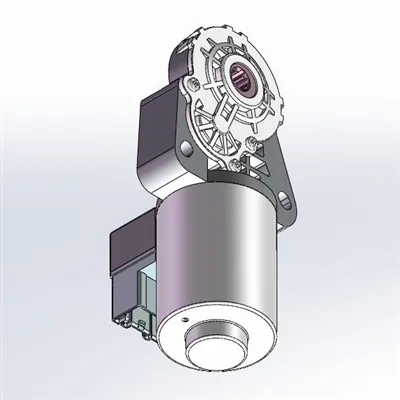
As the core power unit of the wiper assembly, the motor's technological path is evolving comprehensively from traditional mechanical to electronic, upgrading the drive system towards intelligence, lightweighting, and comfort.
Electronic motors, with their advantages of stepless speed regulation, precise control, and quiet operation, are gradually replacing mechanical motors, and their penetration rate continues to rise. On the one hand, by integrating rain sensors, electronic wipers achieve automatic stepless adjustment of wiping speed, upgrading from a passive tool of "human observation and manual operation" to an active intelligent module of "environmental perception, ECU decision-making, and precise execution," significantly improving driving safety and operational convenience. On the other hand, through electromagnetic design optimization, structural innovation, and the application of new materials, electronic wipers achieve weight reduction and efficiency improvement while enhancing comprehensive performance such as anti-aging, corrosion resistance, and high electromagnetic compatibility. Furthermore, electronic wipers eliminate brush friction and commutation sparks, achieving efficient cleaning and quiet operation, making an increasingly prominent contribution to driving comfort in the era of new energy vehicles. In the future, with the deepening of intelligent driving technology, the wiper system will be further deeply integrated with the vehicle's perception network and domain control system, continuously...
VI. Miniaturization, Intelligentization, and High Performance: Seat Motors Enter the Brushless Era
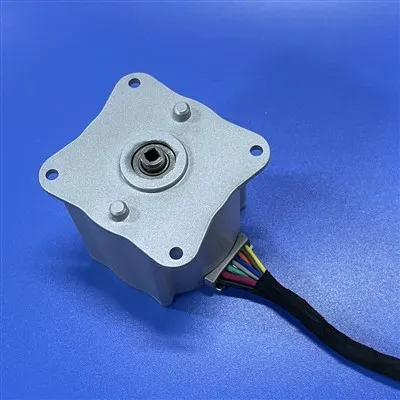
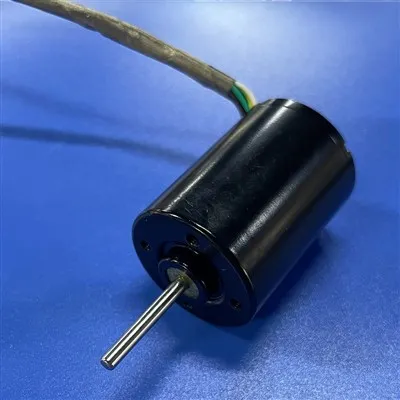
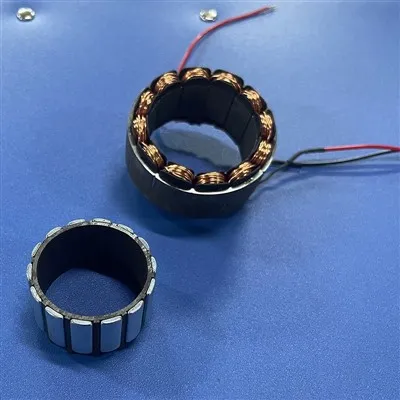
Automotive seat motors are undergoing a crucial transformation from traditional brushed motors to brushless motors, and are continuously evolving towards miniaturization, intelligence, and high performance. While brushless motors are more expensive, they offer advantages such as long lifespan (up to 20,000 hours), low noise, maintenance-free operation, and minimal electromagnetic interference. They fundamentally avoid the safety hazards of brush sparks, resulting in a significant leap in reliability. Building upon brushless technology, seat motors are evolving towards integrated system solutions through the integration of new technologies, materials, and processes.
In terms of miniaturization, the motor's small size, light weight, and low power consumption are crucial for integrating more functional motors (such as lumbar support, leg support, ventilation, heating, and massage) in the context of new energy vehicles where space and energy consumption are extremely sensitive. This is also key to optimizing space utilization and energy efficiency. In terms of intelligence, by integrating programmable controllers and advanced algorithms, the motor achieves adaptive and precise control of speed and position, and possesses memory and multi-scene linkage capabilities. It upgrades from a single mechanical actuator to an intelligent drive subsystem with perception, decision-making, and execution capabilities, establishing a new industrial positioning as an "intelligent system" within the cabin.
Miniaturization and intelligent upgrades based on brushless technology are profoundly reshaping the technological connotation and product value of seat motors, marking a new stage of development in this field that has moved from traditional component manufacturing to deep integration with the electronic and electrical architecture of the whole vehicle.