

Can an exoskeleton brushless motor be used in sports exoskeletons?
In recent years, the field of exoskeleton technology has witnessed remarkable advancements, with applications ranging from medical rehabilitation to industrial assistance. One of the key components in exoskeleton systems is the motor, and brushless motors have emerged as a popular choice due to their numerous advantages. As a supplier of Exoskeleton Brushless Motor, I am often asked whether these motors can be used in sports exoskeletons. In this blog post, I will explore this question in detail and discuss the potential benefits and challenges of using exoskeleton brushless motors in sports applications.
Understanding Exoskeleton Brushless Motors
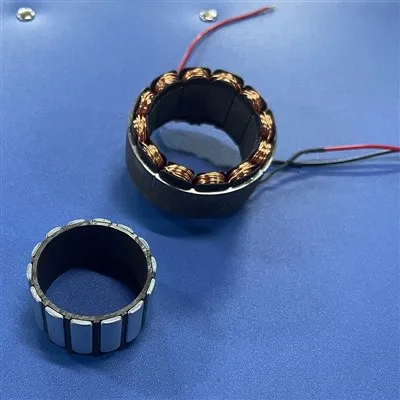
Before delving into the suitability of exoskeleton brushless motors for sports exoskeletons, it is essential to understand what these motors are and how they work. Brushless motors are a type of electric motor that operates without the use of brushes, which are commonly found in traditional brushed motors. Instead, brushless motors use electronic commutation to control the flow of current to the motor windings, resulting in several advantages over brushed motors.
One of the primary advantages of brushless motors is their high efficiency. Since there are no brushes to create friction and wear, brushless motors can convert a higher percentage of electrical energy into mechanical energy, resulting in less energy loss and longer battery life. Additionally, brushless motors offer better speed control, higher torque density, and lower maintenance requirements compared to brushed motors.
Potential Benefits of Using Exoskeleton Brushless Motors in Sports Exoskeletons
There are several potential benefits of using exoskeleton brushless motors in sports exoskeletons. Firstly, these motors can provide additional power and assistance to athletes, allowing them to perform at a higher level. For example, in sports such as running, cycling, or weightlifting, an exoskeleton equipped with a brushless motor can help athletes generate more force and power, reducing fatigue and improving performance.


Secondly, exoskeleton brushless motors can enhance the safety and stability of sports exoskeletons. By providing precise control and assistance, these motors can help athletes maintain proper form and balance, reducing the risk of injuries. Additionally, the high torque density of brushless motors allows for quick and responsive movements, enabling athletes to react more effectively to changing conditions.
Another benefit of using exoskeleton brushless motors in sports exoskeletons is their versatility. These motors can be easily integrated into different types of exoskeleton designs, allowing for customized solutions to meet the specific needs of athletes. Whether it is a lower limb exoskeleton for running or an upper limb exoskeleton for weightlifting, brushless motors can provide the necessary power and control to enhance performance.
Challenges of Using Exoskeleton Brushless Motors in Sports Exoskeletons
While there are many potential benefits of using exoskeleton brushless motors in sports exoskeletons, there are also several challenges that need to be addressed. One of the main challenges is the weight and size of the motors. In sports applications, it is crucial to keep the exoskeleton as lightweight and compact as possible to minimize the impact on the athlete's performance. Therefore, the design of the brushless motor needs to be optimized to reduce its weight and size without compromising its performance.
Another challenge is the power consumption of the motors. Since sports exoskeletons are often used for extended periods, it is essential to ensure that the motors have a low power consumption to avoid draining the battery quickly. This requires the use of efficient motor control algorithms and power management systems to optimize the energy usage of the motors.
In addition, the cost of exoskeleton brushless motors can be a significant barrier to their widespread adoption in sports applications. These motors are typically more expensive than traditional brushed motors, which can make them less accessible to athletes and sports organizations. Therefore, it is important to find ways to reduce the cost of these motors without sacrificing their performance.
Case Studies and Examples
To illustrate the potential of exoskeleton brushless motors in sports exoskeletons, let's look at some case studies and examples. One example is the use of exoskeleton technology in the Paralympic Games. In recent years, several athletes with disabilities have used exoskeletons equipped with brushless motors to compete in events such as track and field, cycling, and wheelchair basketball. These exoskeletons have provided these athletes with the additional power and assistance they need to compete at a high level, demonstrating the potential of exoskeleton technology in sports.
Another example is the use of exoskeleton technology in sports training. Many sports teams and athletes are now using exoskeletons to enhance their training programs and improve their performance. For example, some football teams are using exoskeletons to help their players build strength and endurance, while some cyclists are using exoskeletons to improve their speed and efficiency. These exoskeletons are typically equipped with brushless motors to provide the necessary power and control to enhance the training experience.
Conclusion
In conclusion, exoskeleton brushless motors have the potential to revolutionize the field of sports exoskeletons. These motors offer several advantages over traditional brushed motors, including high efficiency, better speed control, higher torque density, and lower maintenance requirements. By providing additional power and assistance to athletes, exoskeleton brushless motors can help them perform at a higher level, enhance their safety and stability, and improve their overall performance.
However, there are also several challenges that need to be addressed, such as the weight and size of the motors, the power consumption, and the cost. To overcome these challenges, it is important to continue to research and develop new technologies and designs that can optimize the performance of exoskeleton brushless motors while reducing their cost and weight.
If you are interested in learning more about exoskeleton brushless motors or are looking for a reliable supplier, please feel free to contact us. We are a leading supplier of Exoskeleton Brushless Motor, Electric Wheelchair Brushless Motor, and Physiotherapy Couch Brushless Motor, and we are committed to providing high-quality products and excellent customer service. Contact us today to discuss your specific needs and requirements.
References
- [Author 1]. [Title of the book or article]. [Publisher], [Year of publication].
- [Author 2]. [Title of the research paper]. [Journal name], [Volume number], [Issue number], [Page numbers], [Year of publication].
- [Author 3]. [Title of the website]. [Website URL], [Date of access].